

The most important thing to understand about the luxury property market in 2026 is that it has changed character. Not direction, but character. The post-pandemic frenzy has given way to something more considered: a market defined by genuine demand, long-term conviction and a quality of buyer who is transacting on fundamentals rather than urgency. For those with the right guidance and the right network, the second half of 2026 represents one of the more compelling windows for acquisition this decade has offered.
The global backdrop: stability, selectivity and a generational shift in wealth
The most consequential shift in the global environment over the past eighteen months has been the normalisation of monetary policy. The ECB has returned inflation to its 2 percent target and is expected to hold its policy rate there through the remainder of 2026, bringing welcome stability to a sector that spent two years navigating uncertainty. The Bank of England is expected to deliver one further rate cut before year end. For luxury buyers, who transact predominantly in cash, rate movements matter less than sentiment, and sentiment in H2 2026 is measurably more constructive than it was twelve months ago.
Underpinning that sentiment is a structural demand driver of considerable scale. Approximately six trillion US dollars in wealth was inherited globally in 2025 alone, a generational transfer that is becoming one of the most significant demand drivers for luxury real estate worldwide. This is not speculative capital chasing short-term gains. It is long-term wealth seeking durable, tangible assets in stable jurisdictions.
Global market intelligence for 2026 points to a Prime Sentiment Index in positive territory, with demand normalising from the elevated levels of 2024 and 2025 while price outlook has edged upward. The moderation in demand is being read by analysts as a healthy recalibration rather than a retreat. Furthermore, for ultra-high-net-worth individuals, property is increasingly being assessed through the lens of durability, experience and legacy rather than short-term appreciation, a shift that makes the buyer base more stable and pricing more resilient across cycles.
Europe: a market in pragmatic recovery
The European luxury residential real estate market is projected to grow at close to 5 percent annually through the end of the decade. Within that broader picture, the most relevant markets for internationally mobile buyers are telling individual stories of resilience and scarcity.
Monaco remains in a category of its own. With just over two square kilometres of land and constant international demand, supply constraints are absolute. Following a record 2025 in which average prices reached approximately €57,569 per square metre and total transaction value held at €5.9 billion for the second consecutive year, the second half of 2026 points to continued price stability with modest upward pressure. Cash buyers continue to dominate and there is no meaningful new supply pipeline beyond the recently delivered Mareterra development, making Monaco one of the most structurally defensive markets in the world.
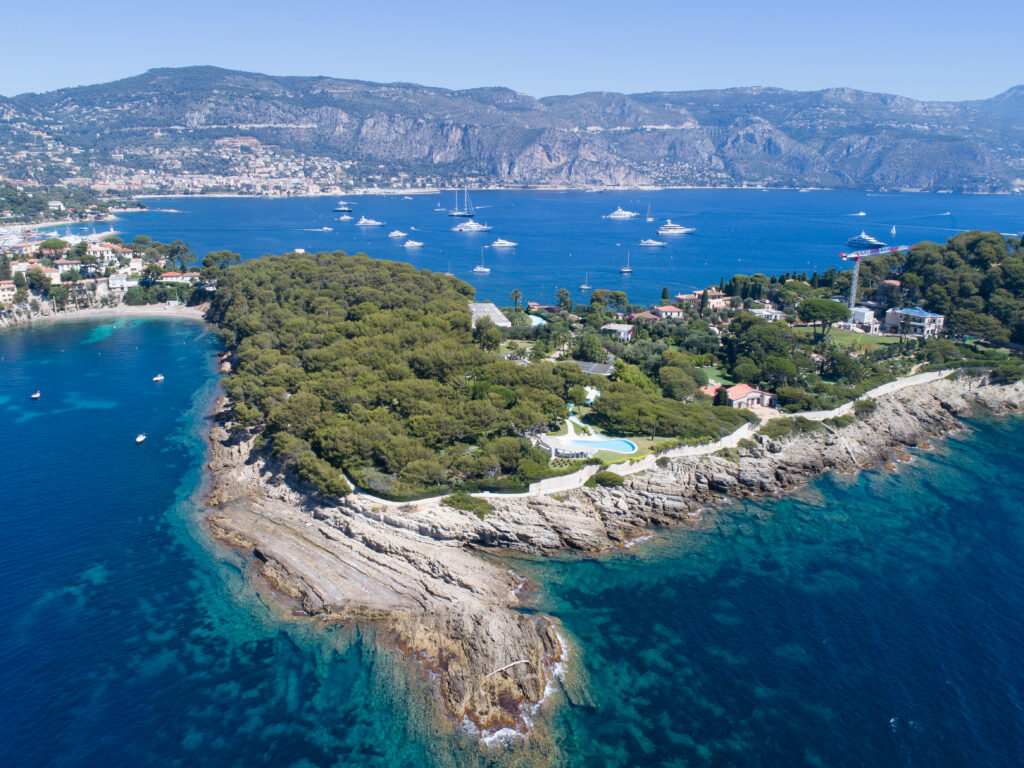
On the French Riviera, ultra-luxury sales have almost doubled compared to pre-pandemic levels, with transactions above ten million euros rising sharply through 2024 and into 2025. Looking ahead to H2 2026, the French Riviera appears well positioned to benefit from continued international demand, particularly in its most established luxury markets. While buyers are becoming increasingly selective, limited supply of prime properties, combined with sustained interest from international purchasers, continues to support the market’s fundamentals. We expect demand to remain concentrated on turnkey homes in exceptional locations, reinforcing the premium attached to rarity, quality and lifestyle appeal.
In Ibiza, average property prices stand at approximately €7,000 per square metre as of mid-2026, with prime waterfront districts exceeding €7,500. Price growth in the luxury segment is forecast at between 7 and 12 percent for the full year, driven by structural scarcity, the shift toward year-round primary residence ownership and a chronic undersupply of quality stock relative to demand. The Balearic Islands’ strict development regulations ensure that this imbalance is unlikely to correct materially in the foreseeable future.
Across Paris and London, prime residential markets have benefited from the improved rate environment and the return of international buyer confidence. Investment volumes across European real estate are forecast to rise approximately 19 percent in 2026, with the highest-quality residential assets continuing to outperform the broader market in both liquidity and value retention.
The Middle East: Dubai navigates geopolitical headwinds and finds its footing
Dubai entered 2026 with extraordinary momentum, recording its highest ever annual transaction value in 2025 and sustaining that pace into January 2026 with ultra-luxury sales above AED 10 million reaching 990 transactions in that month alone.
The Iran-US conflict in the first quarter of 2026 was a genuine shock to regional sentiment. Property sales slowed materially, insurance and financing sectors began pricing in higher risk premiums, and the Dubai real estate stock index recorded its worst single-week performance on record. The impact on the physical property market, however, was more measured: a change in mood rather than a collapse in values. Buyers became more selective, negotiations returned to the process and the gap between strong assets and weaker ones became considerably easier to see.
The ceasefire has changed the picture for H2 2026. International buyers from Europe, South Asia, and the broader Middle East are returning to the market, with luxury and prime residential properties seeing the fastest recovery in activity. Most analysts expect any price impact from the conflict to prove temporary, consistent with how Dubai has historically responded to regional disruption. Prime luxury areas are forecast to see 6 to 10 percent price growth across the full year, supported by tax-free ownership, strong rental yields, and the emirate’s enduring position as the region’s most stable economic hub. For buyers with conviction, the recalibration of H1 2026 may prove to have created a more interesting entry point than the frenzied conditions that preceded it.
Asia Pacific: resilient, selective, and increasingly relevant to global portfolios
Asia Pacific is a region that luxury real estate commentary sometimes underweights, yet it represents one of the most structurally significant sources of both buyer demand and capital flow in the global prime market.
The region is poised for another solid year, with investment activity forecast to strengthen across most markets. Singapore stands out most clearly for internationally mobile buyers. Recognised consistently as a safe haven for global capital, the city-state combines political stability, governance depth, and strong fundamentals in both residential and commercial sectors. For UHNW individuals restructuring their geographic exposure in light of volatility elsewhere, Singapore continues to attract serious, long-term capital.
Japan, and Tokyo in particular, has emerged as one of the most discussed luxury residential markets globally over the past eighteen months. A combination of relative currency weakness, improved infrastructure, and renewed international interest has driven prime residential values to levels not seen in a generation, while still offering meaningful value compared to Monaco, London, or Singapore on a price per square metre basis. Medium-term supply across the Asia Pacific region is projected to contract, reinforcing pricing power in the highest-quality residential assets and supporting a broadly constructive outlook for H2 2026.
The Americas: a market of two speeds
The United States luxury market in 2026 reflects the bifurcation visible globally. Luxury home sales outperformed the general market in both volume and value in 2025, driven by a 44 percent surge in foreign buyer activity and the generational wealth transfer now moving through the market. At the super-prime level, demand from international buyers, particularly from Europe and Latin America, has proved resilient to financing costs and macro uncertainty.
The broader US market contends with its own headwinds: trade policy volatility, a strong dollar making dollar-denominated assets expensive for some foreign buyers and a mid-market segment squeezed by elevated financing conditions. At the ultra-prime end, these pressures matter considerably less. New York, Miami and Los Angeles continue to attract global capital in the ten-million-dollar-plus category, with inventory at this level remaining tightly controlled and pricing holding firm.
What this means for buyers in H2 2026
The defining characteristic of the luxury property market in 2026 is balance. Not the imbalance of the post-pandemic years and not the paralysis that uncertainty created in 2023. Rather, a market in which well-prepared, well-advised buyers have genuine opportunities to acquire exceptional assets at fair values, in a context where the most important variables are all pointing constructively.
Currency dynamics also deserve attention. For buyers transacting in dollars or dirhams, the relative strength of both against the euro in 2026 creates a meaningful pricing advantage in European markets. That advantage is not permanent and buyers who act on it in H2 2026 will, in retrospect, have moved at the right moment.
Above all, the luxury property market in 2026 rewards conviction, preparation and the quality of relationships built before they are needed. Across every market, the buyers securing the finest assets are those who arrived with a clear brief, the right local partner and the readiness to move decisively when the right property became available.