

Monaco welcomes foreign buyers with open arms. Unlike many countries that impose restrictions on non-resident ownership, buying property in Monaco as a foreigner requires no special authorisation, no local partner, and no nationality-based limitations. Anyone, regardless of passport or residency status, can legally purchase real estate in the Principality. That openness, however, does not make the market simple. Monaco is the most expensive residential real estate market in the world, with average prices reaching approximately €57,500 per square metre in 2025. The market moves quickly, inventory is structurally limited, and a significant share of the best properties never appear on public listings. Understanding the process before you begin is not a formality. It is a genuine competitive advantage.
Why Monaco attracts foreign buyers in 2026
The appeal of buying property in Monaco goes well beyond prestige. The Principality offers a combination of structural advantages that very few jurisdictions can match simultaneously, and those advantages have become increasingly relevant as global tax environments tighten.
There is no income tax, no capital gains tax, no wealth tax, and no inheritance tax between direct relatives. For high-net-worth individuals managing complex international assets, this is not simply a fiscal convenience. It is a fundamentally different framework for wealth preservation. A buyer who sells a Monaco property at a significant gain pays nothing on that gain. That reality, combined with the Principality’s absolute political stability and its position outside the European Union while remaining within the Schengen Area, creates a unique legal and fiscal environment that no other comparable destination fully replicates.
Beyond taxation, Monaco offers something harder to quantify but equally valued by its residents: genuine security and privacy. The Principality has one of the highest concentrations of police per capita in the world, CCTV coverage across virtually the entire territory, and a culture of discretion that permeates both daily life and business interactions. For families relocating from larger cities, the contrast is immediate and often decisive.
The quality of international schooling is another factor that drives purchasing decisions, particularly among buyers with children. The Principality is home to several well-regarded international institutions, and its compact geography means that school, home, the beach and the office are rarely more than a few minutes apart. That density of convenience, within one of the most beautiful settings on the Mediterranean, is what turns a fiscal decision into a lifestyle one. For many buyers, that is ultimately what makes Monaco irreplaceable.
What the market looks like in 2026
Monaco’s property market ended 2025 at a historically high level, and early 2026 shows no sign of retreat. According to the official Real Estate Observatory published by IMSEE in February 2026, the Principality recorded 493 residential transactions in 2025, a 5.8 percent increase on 2024’s already record 466 sales. Total transaction value held steady at €5.9 billion, matching the record set the year before. Beneath that stable headline, however, the market shifted considerably in character.
The most significant change between 2024 and 2025 was the reversal of the new-build versus resale balance. In 2024, new-build sales surged to 101 transactions, driven almost entirely by the delivery of Mareterra. In 2025, with that pipeline largely absorbed, new-build sales fell back to 64. The resale market more than compensated. With 429 resale transactions in 2025, representing a 17.5 percent increase in one year, resale values surpassed the symbolic €3.2 billion threshold for the first time. Monte-Carlo alone exceeded €1 billion in resale transactions, confirming its position as the market’s most active and resilient district.
Pricing in 2025 reached a new benchmark. The average price per square metre rose to €57,569, cementing Monaco’s position as the most expensive residential market in the world. Furthermore, for the first time, the average sale price exceeded €40 million, driven by a limited number of exceptionally high-value transactions. In 2025, 22 resale transactions exceeded €20 million, the highest level ever recorded.
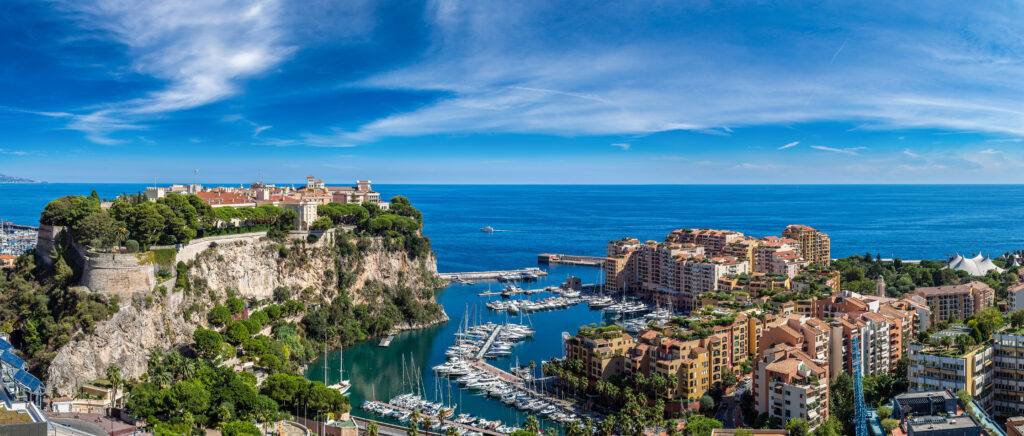
The composition of demand also shifted. Nearly 80 percent of sales in 2025 involved properties with three bedrooms or more, reflecting a long-term move towards Monaco as a primary family residence rather than a pied-à-terre market. Buyers are increasingly looking for generous layouts, outdoor space, and sea views, categories where supply is most constrained.
As for early 2026, demand for prime and ultra-prime residential property remains strong, underpinned by limited supply and sustained international interest. Buyers from Europe and the Middle East are consistently active, attracted by the Principality’s favourable tax framework, security, and quality of life. With Mareterra now fully delivered and no comparable new development on the immediate horizon, land constraints make other significant new builds unlikely in the near future, which should continue to support pricing stability throughout 2026. Price growth for the year is expected to range between 2 and 5 percent depending on property type, location and quality, moderate by recent standards but on top of an already record base.
For anyone considering buying property in Monaco as a foreigner, the market signals in early 2026 point in one direction: demand is durable, supply is not growing, and well-positioned properties continue to trade quickly and at strong prices.
The buying process, step by step
Buying property in Monaco as a foreigner follows a clear and well-regulated process, broadly similar to the French system but with some important specificities.
The first step is working with a licensed local agent. This is not a formality to accelerate. Given that a substantial proportion of Monaco’s most interesting properties circulate privately, the relationship you establish with a well-connected local agency determines the inventory you have access to. The market moves quickly and being properly introduced matters.
Once a suitable property is identified, an offer is submitted in writing. When accepted, both parties sign a preliminary sales agreement known as the compromis de vente. At that point, a deposit of typically 10 percent of the purchase price is paid into an escrow account held by the notary. The notary in Monaco plays a central role, not simply as a formality, but as the professional responsible for verifying the title, conducting due diligence, and ensuring the full legality of the transaction.
The period between the compromis and the final act of sale typically runs between two and three months. During that time, legal checks are completed and financing, if required, is arranged. The final signing transfers ownership formally.
What it costs: taxes and fees
This is where foreign buyers need to pay close attention, particularly regarding their legal structure.
For individuals buying in their own name, or through a Monaco SCI (a local property holding company), the registration tax is 6 percent of the purchase price, and notary fees add a further approximate 1 to 2 percent. For foreign companies purchasing Monaco property, the registration tax rises to 9 percent. This distinction is significant and worth planning carefully with legal counsel before proceeding.
Agent fees in Monaco are typically 5 percent plus VAT for sellers, and 3 percent plus VAT for buyers. For new construction, a 20 percent VAT applies in place of the registration tax. There is no annual property tax in Monaco, and as noted, no capital gains tax on resale. Running costs, once purchased, are therefore considerably lower than in comparable markets.
Financing as a foreign buyer
Monaco’s banking institutions are highly experienced with international clients, and financing is available to foreign buyers. However, expectations differ from those in other markets. Lenders typically require a down payment of between 30 and 50 percent of the purchase price, reflecting both the scale of transactions and the profile of the market. Proof of funds and a clear financial picture will be required early in the process, so having these prepared before beginning your search avoids delays at the critical moment when an offer needs to move quickly.
Does nationality make a difference?
In terms of ownership rights, no. There are no nationality-based restrictions on buying property in Monaco. A buyer from the United States, the Gulf states, Russia, China or anywhere else has identical legal access to the market as a French or European citizen.
Where nationality can have an indirect effect is in the banking and due diligence process. Clients from certain jurisdictions may be subject to more extensive compliance checks, which is standard practice across Monaco’s financial institutions. This is not an obstacle, but it does mean allowing additional time and ensuring documentation is thorough and well-organised from the outset.
Property ownership and Monaco residency
Owning property in Monaco does not automatically confer residency, but it constitutes strong evidence of commitment to the Principality and is a significant advantage in a residency application. To obtain a Monaco residence permit, applicants must demonstrate stable accommodation, which property ownership clearly satisfies, along with proof of sufficient financial means, typically demonstrated through a bank deposit of around €500,000 or more with a Monaco institution, and a clean criminal record.
Residence permits are issued for three years and renewable. Monaco does not offer citizenship by investment, and naturalisation requires twelve years of continuous residence, after which dual citizenship is not permitted. For most buyers, however, residency rather than citizenship is the goal, and property ownership is the natural first step.
What to know before you start
The single most important piece of advice for anyone buying property in Monaco as a foreigner is to work with an agency that genuinely knows the market from the inside. Monaco is a small, interconnected community where relationships determine access. The properties that represent the best value rarely appear on open platforms. They move through trusted networks, often before any formal listing is created.
Speed matters too. When the right property comes available, the buyers who are prepared, with financing in place, legal counsel identified, and a clear brief established, are the ones who secure it.
At Orion, our member agency in Monaco, La Costa Properties, has been present in the Principality for over forty years. Their team of fifteen, including multilingual negotiators, legal specialists and compliance professionals, accompanies international buyers through every stage of the process with the discretion and depth of knowledge that this market demands. To discuss your search in Monaco, visit La Costa Properties page or contact us directly.